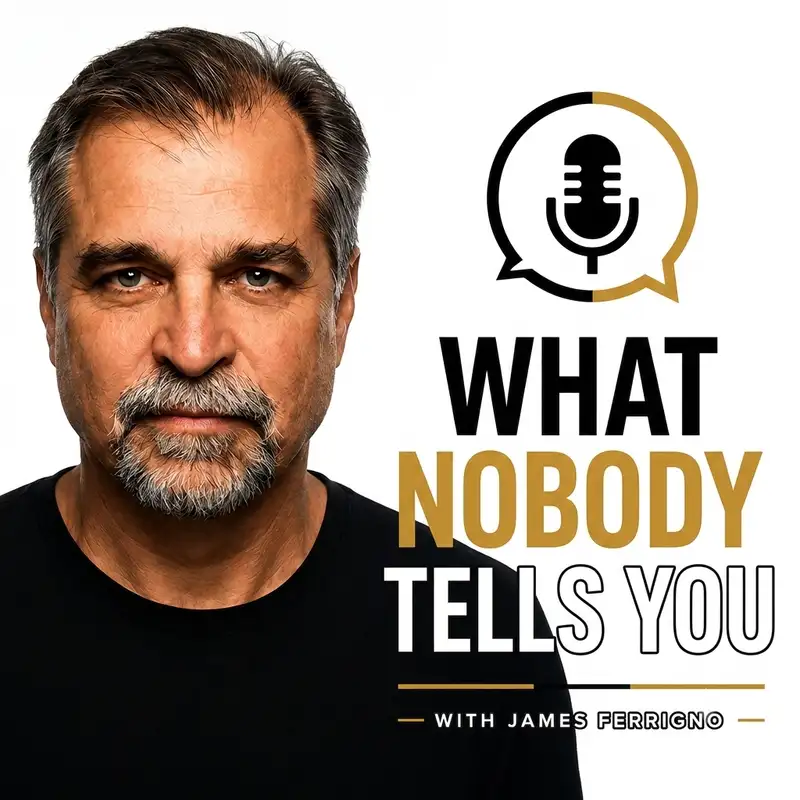
How a Lack of Self-Love Can Ruin Your Relationships | James Ferrigno
Download MP3How much does the way you feel about yourself affect your relationships?
More than you might think.
Work with James: https://whatnobodytellsyou.carrd.co
Work with James: https://whatnobodytellsyou.carrd.co
In this episode of What Nobody Tells You, James explores the connection between self-love and healthy relationships—and why a lack of self-love can affect the way we communicate, set boundaries, handle conflict, and even treat the people we love.
When we don't have a strong sense of self-love, we may unconsciously expect other people to make us feel secure, meet needs we haven't clearly communicated, or behave the way we want them to behave. When those expectations aren't met, resentment, anger, disappointment, and conflict can follow.
James looks at how we can sometimes set a trap for ourselves by failing to understand what we actually want, not communicating it clearly, and then blaming someone else when they don't give us what we never explicitly asked for.
The episode also explores the relationship between self-love and boundaries. Healthy boundaries aren't about building walls or pushing people away. They're about understanding where you end and another person begins—and being able to protect your time, energy, choices, emotional health, privacy, and sense of self.
The Karpman Drama Triangle
A substantial part of the episode examines the Drama Triangle, presented as a model rather than a literal description of people.
The three roles are:
Victim
The person adopts a helpless position and may seek pity or make the other person responsible for their emotional state.
Rescuer
The person tries to solve other people's problems, sometimes without being asked, and may inadvertently create dependence.
Persecutor
The person attempts to control through anger, blame, criticism, or intimidation.
A particularly useful point is that these aren't necessarily permanent personality types. A person can move from rescuer to victim to persecutor, sometimes within a single argument.
The goal isn't simply to identify which role your partner is playing.
The first place to look is yourself.
Practical Exercise From the Episode
The 30-Day Mirror Exercise
You recommend looking into your own eyes in a mirror for approximately two or three minutes, potentially twice a day.
Say things such as:
"I love you, James. You are enough."
Then add positive statements about yourself—your abilities, qualities, relationships, accomplishments, or other things you genuinely appreciate.
You recommend trying it for 30 consecutive days, restarting if you miss a day, and paying attention to what changes.
This could make a good practical takeaway for listeners.
Disclaimer: The information and perspectives shared on What Nobody Tells You are for educational and informational purposes only and are not intended to diagnose, treat, or prevent any medical, psychological, or mental health condition. The experiences and opinions expressed by the host and guests are their own and should not be considered a substitute for professional medical, psychological, legal, financial, or other qualified professional advice. If you need professional assistance, please consult an appropriately qualified professional.
Disclaimer: The information and perspectives shared on What Nobody Tells You are for educational and informational purposes only and are not intended to diagnose, treat, or prevent any medical, psychological, or mental health condition. The experiences and opinions expressed by the host and guests are their own and should not be considered a substitute for professional medical, psychological, legal, financial, or other qualified professional advice. If you need professional assistance, please consult an appropriately qualified professional.